
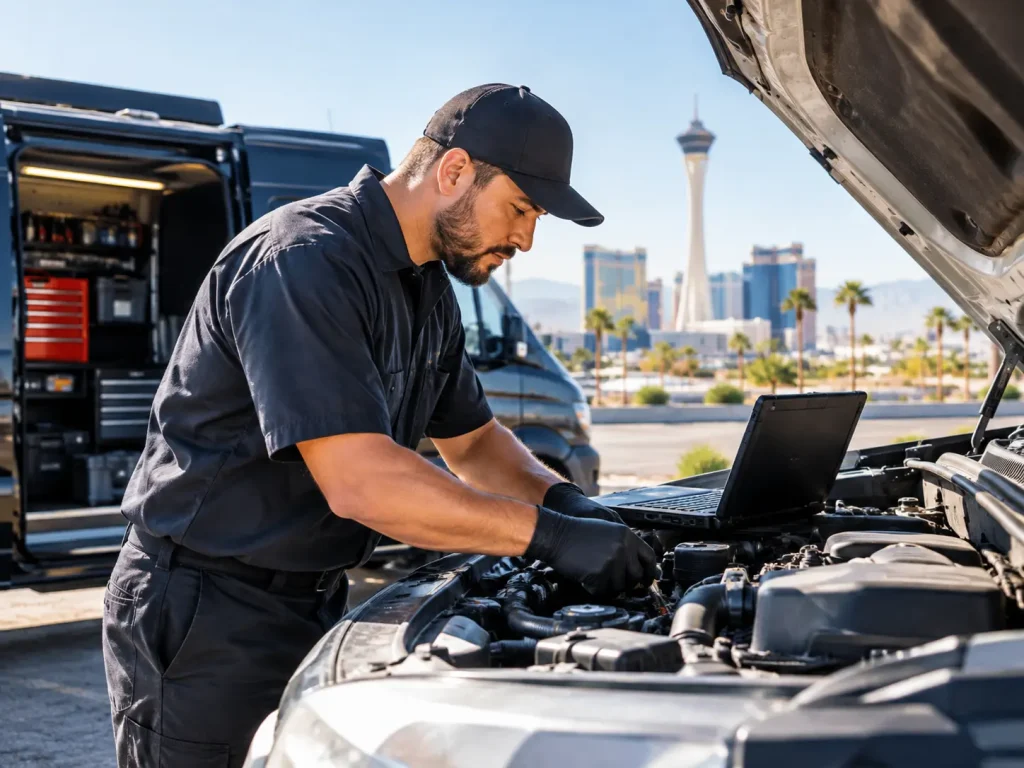
Few maintenance items get as little attention as engine coolant, and few matter as much in a place like Henderson. When summer temperatures soar and traffic crawls along the highways, your cooling system is working as hard as any part of your car. Over time, the coolant inside it wears out, and a tired system is one of the most common reasons engines overheat. This Q&A explains what a coolant flush does, how often you need one, what radiator service involves, and how a mobile mechanic in Henderson can take care of it without a trip to the shop.
What Is Coolant, and What Does It Do?
Coolant, also called antifreeze, is the fluid that circulates through your engine and radiator to carry heat away. It is usually mixed with water, and it does several jobs at once. It absorbs heat from the engine, raises the temperature at which the fluid boils, protects against freezing in cold weather, and contains additives that guard the metal parts of the cooling system against rust and corrosion. It also lubricates the water pump seal.
What Is a Coolant Flush?
A coolant flush is a service that removes the old coolant from the cooling system and replaces it with fresh fluid. In a full flush, a technician uses equipment to push cleaning fluid or water through the system to dislodge deposits and clear out old coolant, and then refills the system with the correct coolant. A simpler service, often called a drain and fill, drains much of the old coolant and replaces it, but leaves some behind. Which approach is right depends on your vehicle and the condition of the system, and a good technician will explain the difference.
Why Does Coolant Need to Be Replaced?
Coolant does not last forever. The protective additives in it get used up as they fight corrosion, and the fluid becomes less effective at protecting metal parts. As it ages, it can turn acidic, which attacks the radiator, water pump, heater core, and gaskets. Rust, scale, and debris can build up and clog narrow passages in the radiator and engine. Old coolant also loses some of its ability to resist boiling, which matters a great deal when the weather is hot. Replacing the fluid on schedule is far cheaper than repairing the damage that neglected coolant can cause.
How Often Do I Need a Coolant Flush?
There is no single answer, because different vehicles use different types of coolant with different service lives. Some older formulas need replacement fairly often, while many newer long life coolants are designed to go much further between changes. The best source is your owner’s manual, which lists the interval for your specific car and the type of coolant it needs. Driving conditions matter too. Heavy traffic, towing, extreme heat, and short trips can all make a system work harder, and a technician may recommend checking the coolant more often if your driving falls into those categories.
How Do I Know If My Coolant Is Going Bad?
- The coolant looks rusty, brown, murky, or has particles floating in it
- You see oily film or sludge in the reservoir or around the radiator cap
- The level keeps dropping, which can point to a leak
- The temperature gauge runs higher than normal, especially in traffic
- You notice a sweet, syrupy smell, often a sign of leaking coolant
- The heater blows cold or lukewarm air even after the engine warms up
- There are puddles or stains under the car after it has been parked
- The vehicle is past the interval in your owner’s manual
A technician can also test the coolant with simple tools to check how well it still protects against heat and corrosion.
What Happens If I Never Change My Coolant?
Old coolant lets corrosion eat away at the system from the inside. Radiators can clog or leak, water pumps can fail early, thermostats can stick, and hoses can break down. All of those problems raise the risk of overheating, and an overheated engine can suffer warped parts, a blown head gasket, or worse. In a hot climate, that risk is higher because the system has less margin to spare. Maintaining the coolant is one of the least expensive ways to protect your engine.
What Does Radiator Service Include?
Radiator service goes beyond just changing the fluid. A thorough service often includes:
- Testing the coolant for condition and freeze and boil protection
- Inspecting the radiator, hoses, clamps, and cap for cracks, leaks, or wear
- Checking the thermostat, water pump, and cooling fans for proper operation
- Pressure testing the system to look for leaks
- Draining the old coolant and flushing the system if appropriate
- Refilling with the correct type and mix of coolant for your vehicle
- Bleeding trapped air out of the system, which is important for proper cooling
- Checking the level and running the engine to confirm the system works
Skipping the air bleeding step is a common reason a freshly serviced system can still run hot, so it is worth asking about.
Can I Use Any Coolant in My Car?
No. Coolants differ in their chemistry, color, and additive packages, and the wrong one can cause problems. Color alone is not a reliable guide, since manufacturers use many different shades. Your owner’s manual lists the specification your engine requires, and mixing incompatible types can reduce protection or create sludge. Most coolant is also mixed with water at a set ratio, often about half and half, though some products come premixed. Pure water by itself is not a good choice, because it lacks corrosion protection and boils at a lower temperature. A technician will use the right type and ratio for your car.
Can I Do a Coolant Flush Myself?
Some drivers do, but there are real cautions. The cooling system is under pressure and the fluid can be scalding hot, so you should never open the radiator or reservoir cap on a hot engine. Coolant is also toxic, and it has a sweet smell and taste that can attract pets and children, so spills must be cleaned up right away. Used coolant is considered hazardous waste and must be disposed of properly, usually at a recycling or collection facility, not poured down a drain or onto the ground. Getting all the air out of the system after a refill can also be tricky. If you are not comfortable with these steps, it is best to leave the job to a professional.
Why Is Coolant Service Especially Important in Henderson?
Henderson summers put heavy demands on the cooling system. Triple digit heat, long highway commutes, and stop and go traffic leave the engine with very little room for error. A system with worn coolant, a weak hose, or a failing fan can go from fine to overheating quickly. Our article on desert commuting car maintenance tips for Henderson drivers explains what else to keep an eye on when your daily drive takes place in desert conditions, from belts and hoses to tires and the battery.
What Should I Do If My Engine Overheats?
If the temperature gauge climbs toward the red or you see steam, turn off the air conditioning, pull over to a safe place, and turn off the engine. Do not open the hood or the radiator cap right away, because steam and hot fluid can cause serious burns. Wait until the engine has cooled completely before checking the coolant level. Driving further on an overheated engine can destroy it, so it is usually safest to call for help. If your car will not start after an overheating episode, our guide to the top 10 reasons your car won’t start and how to get back on the road covers other possible causes.
Can a Mobile Mechanic Perform a Coolant Flush?
In many cases, yes. A mobile mechanic can come to your home or workplace in the Henderson area, inspect the cooling system, test the coolant, perform a drain and fill or flush, and refill with the correct fluid. A technician can also check hoses, belts, the radiator cap, and the fans while on site, and can take care of the used coolant properly. That saves you the time of dropping the car off at a shop. Some jobs, such as replacing a radiator on certain vehicles or repairing internal engine damage, may need the tools and lift of a full shop, and a trustworthy technician will tell you honestly when that is the case. When you book, share your vehicle’s year, make, model, and mileage, along with any symptoms such as overheating or a sweet smell.
A Few Habits That Help Your Cooling System
- Check the coolant level regularly, only when the engine is cold
- Look under the car for drips now and then
- Watch the temperature gauge, especially in heavy traffic and on hot days
- Follow the service interval in your owner’s manual
- Have the cooling system inspected before summer arrives
- Never ignore a low coolant warning or a sweet smell
Keep Your Engine Cool and Protected
Fresh coolant is a small investment that protects some of the most expensive parts of your car. Know what your manual recommends, pay attention to the signs of trouble, and have the system inspected before the hottest months arrive. A little attention now helps you avoid a roadside breakdown later.
To learn more about our services, visit our homepage. If your coolant is due or your car has been running hot, reach out through our contact us page and we will come to you anywhere in the Henderson area.